


Editor’s Note:
The following is the first entry in the flagship series this Substack was primarily created for. The idea is to create one entry for every year in the history of cinema (the late 19th century will be a special bundle), slowly compiling an Almanac of film.
I grew up loving armchair reference books like the Times World Almanac and as my appreciation of film grew deeper I found myself wishing there was a Film Almanac. I pored over books both old and new and even scoured websites for resources that satisfied my desire, to no avail. There are many great books and websites and we even have AI chatbots now to provide all the information we can dream of. But I didn’t find any that were satisfyingly browsable or curated well enough, year by year. My wish is that one day, when all my entries are complete and perfected, the whole thing can be published into that browsable armchair companion I’ve always wanted.
The years will not be released chronologically. I want to keep it fresh for both myself and my readers by jumping around, back and forth, between the 13 or so decades of film history. I’m starting in 1959 because I find it to be an interesting time for the art of cinema, the business of film, and the culture in the United States and the World at large. There are also a good handful of films from ‘59 that are some of my favorite films of all time.
Thanks for reading and I hope you enjoy following along on this journey as much as I enjoy embarking on it.
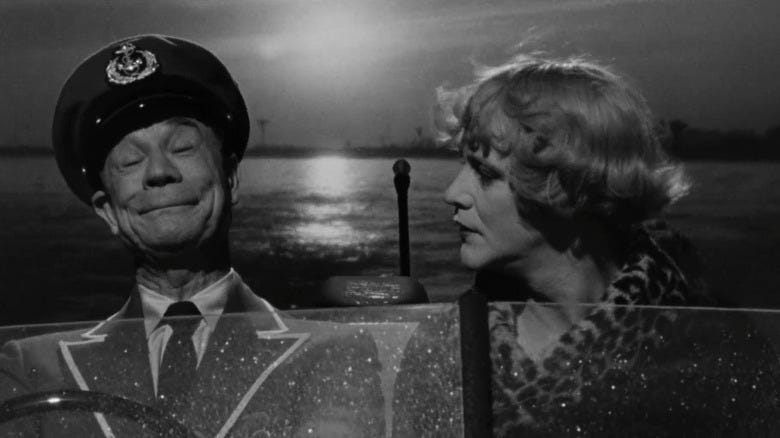
“Well, nobody’s perfect.” — Osgood Fielding III (Joe E. Brown), Some Like It Hot.
Introduction
Nearly the halfway point between now and the birth of cinema, 1959 was a year of major transition for the film industry. The year is full of dichotomies: from small budget box office successes that are now largely forgotten, to big budget successes that will forever be remembered, and to the failures finally becoming recognized now as classics.
The industry was in turmoil as theater ticket sales dwindled and television sales reached all time highs. Industry executives, desperate to fill seats, attempted to innovate, giving people a reason to make the trip to their local palace. Drive-Ins, 3D, CinemaScope, and Smell-O-Vision are all examples of part of the creative innovation used to combat the rise of TV in the 1950s. As the battle for viewership continued 1959 saw consolidation of power within industry giants and it saw unions strike for higher residuals from television.
The year produced one of the biggest Oscar winners in history, Disney’s most visually ambitious film, the greatest comedy ever made, a Hitchcock masterpiece, and a few of my all time favorites. As Sinatra would say, “It was a very good year.”
The Vital Stats
Average ticket price: $0.51 ($5.35 adjusted for inflation)
Television Domination: 82% of US households owned a television set (up from just 9% in 1950), forcing studios to fight harder for eyeballs.
The Drive-In Theaters: Outdoor theaters reached their peak with roughly 4,000 locations, accounting for 25% of all ticket sales.
The Scorecard
Below is a breakdown of what the public paid to see versus what history has deemed a classic (via my personal favorite film rating community, Letterboxd). Note the stark divide between the comedies that made the big bucks and the international dramas that captured critics and contemporary viewers’ imaginations:

I’ve compiled every film mentioned in this post into a comprehensive list on Letterboxd:
Box Office Takeaways
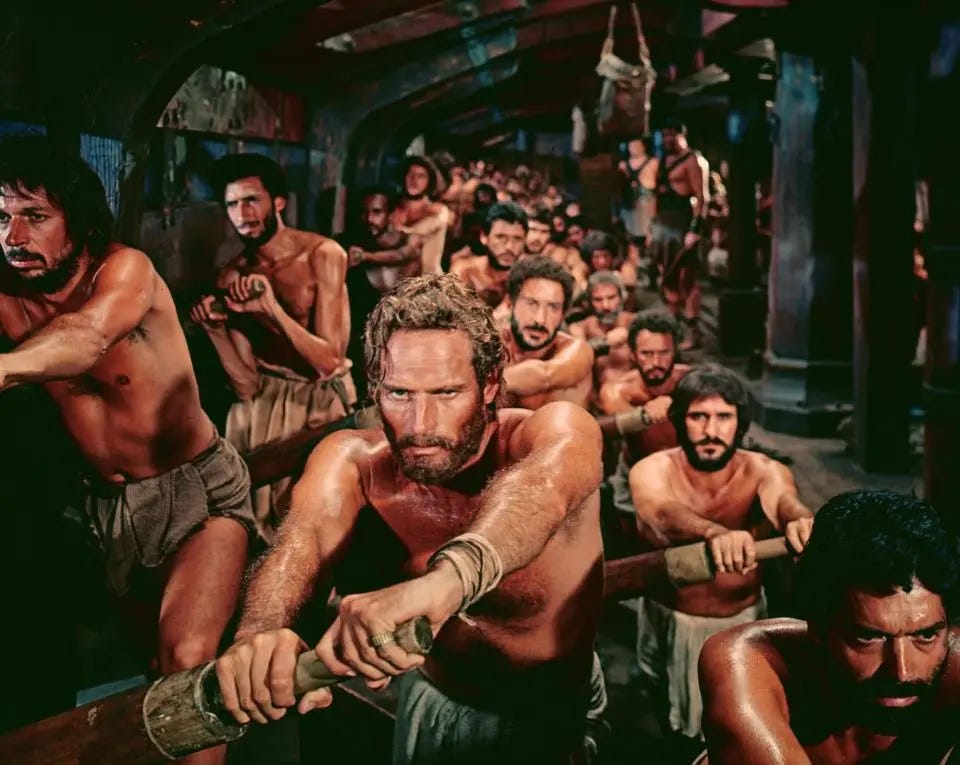
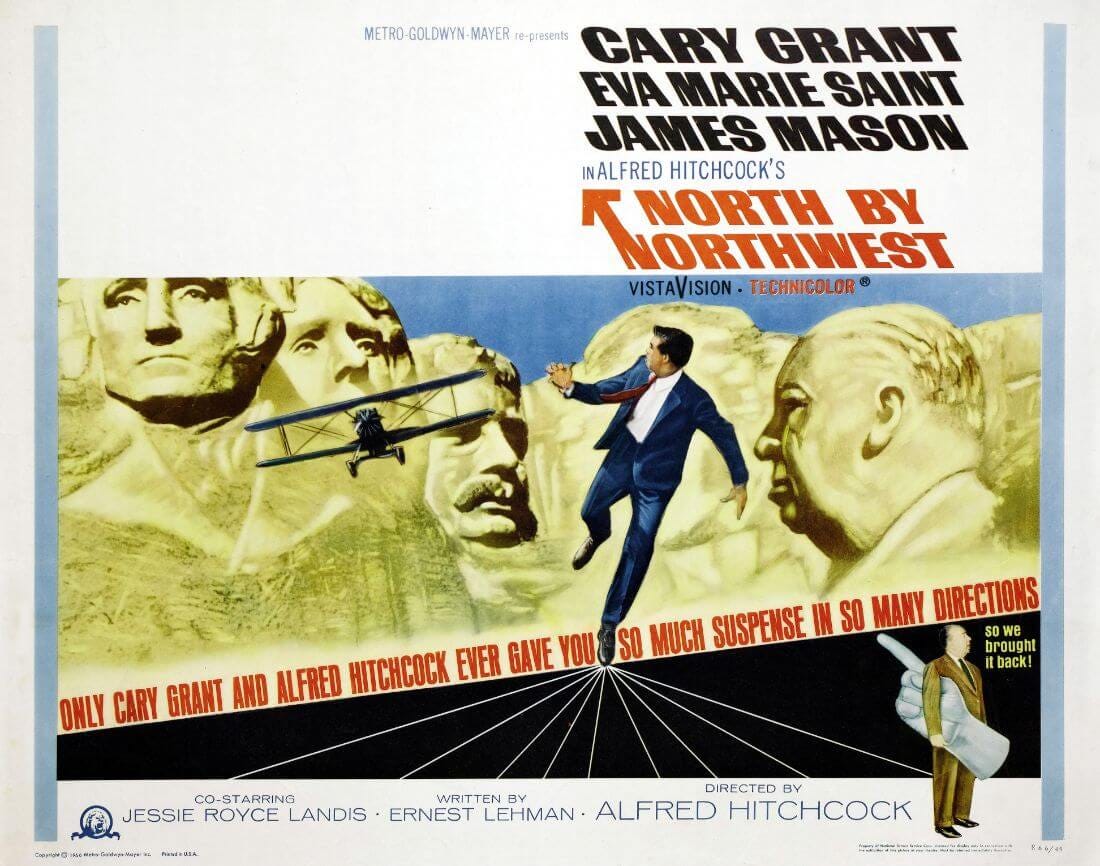
MGM scored big with William Wyler’s big budget roadshow tentpole and religious epic, Ben-Hur, saving MGM from financial ruin. It was far and away the year’s biggest earner as well as becoming the biggest Oscar winner ever with 11 statues, a record now shared with Titanic (1997) and The Lord of the Rings: The Return of the King (2003). Disney, on the other hand, though it sold many tickets, lost on its gamble with Sleeping Beauty. The budget proved too high to achieve the innovation Walt Disney sought (among other things, his first 70mm and stereo film), though he did produce Disney’s most beautiful film for years to come. Comedies like Operation Petticoat, Darby O’Gill and the Little People, and The Shaggy Dog, though big earners, are now largely forgotten. Billy Wilder’s Some Like It Hot and Hitchcock’s North By Northwest proved to be both huge financial and critical successes and maintain their classic classifications today. John Cassavetes Shadows helped form the independent film movement with its tiny budget and comparatively large box office returns. On the European side, Francois Truffaut’s terrific The 400 Blows, along with Chabrol’s Les Cousins, help jump start the French independent film movement coined, Nouvelle Vague, aka The French New Wave.
Critical Consensus
Though it is beyond the scope of these pieces to analyze the box office numbers and critics from around the world, we can take a look at the Letterboxd community and renowned critic Roger Ebert as a small sample of which films from 1959 have maintained respect, regardless of their box office grosses. Notably, six of Letterboxd’s top 10 films from ‘59 are international productions. Two are French (400 Blows and Hiroshima), two are Japanese (The Human Condition and Good Morning), one is Indian (Apur Sansar), and one is Soviet Russian (Ballad of a Soldier). These films didn’t get much play in the United States at the time, but thanks to the hard work of preservationists, many have been restored and have been enjoying a second life of high praise among the film enthusiast community.
My Two Cents
What films I love from ‘59
There is a lot to love about this year in film. I watched Ben-Hur at a young age and remember being enthralled by the epic (I’m looking forward to a new restoration on 4k being slated to be released soon). I’ve been a fan of Disney animated films since I was a child and even though Sleeping Beauty was released over 20 years before I was born, it always felt fresh and exciting - I’ve only grown to appreciate it more as I’ve aged. Some Like It Hot was the first black and white movie I really fell in love with and it helped pique my interest in classic cinema. Later in life I finally watched Satyajit Ray’s The Apu Trilogy, or, The World of Apu (it wasn’t available for years - the history of its existence is itself a fascinating story) and the trilogy are now some of my favorite films of all time. The final installment, ‘59’s Apur Sansar, it probably my favorite of the three. Masaki Kobayashi’s The Human Condition is another groundbreaking work I discovered later in life that became an all time favorite. I believe Rio Bravo is one of the greatest westerns ever made and Howard Hawks is one of the greatest directors. Douglas Sirk’s technicolor melodramas were never something I thought I’d enjoy, let alone adore, but here I am citing Imitation of Life as a favorite. The 400 Blows, North By Northwest, Anatomy of a Murder - what can I say? They’re all indelible classics. I’m also a huge jazz fan and, interested in the genre or not, Jazz on a Summer’s Day is a fantastic documentary to enjoy, volume turned up, in the summertime.

Overlooked Gems & Oddities
There are some films that didn’t reach any of these lists worth mentioning. Ride Lonesome (of Ranown fame - one of Budd Boetticher’s best), The Hanging Tree, Last Train from Gun Hill, and Day of the Outlaw, while not living up to the high standards of Rio Bravo, are often criminally overlooked Westerns. The World, the Flesh, and the Devil is fascinating look into a post-apocalyptic world, wonderfully produced with Harry Belafonte’s best performance. House on Haunted Hill and The Mummy are funky little horror films that were ably produced. Gidget ushered in the surf film movement and really a countercultural surfing movement as a whole, especially in California.
The Industry
Deal of the Decade: Talent agency, MCA (Music Corporation of America) buys Universal Pictures, consolidating production and talent into a single powerhouse. This move effectively creates the modern Hollywood business model. The move bolsters the studio’s ability to package big budget movies with great talent to draw in audiences, hoping to lure them away from their televisions.
The Labor Wars: In November, SAG and the WGA voted to strike (beginning Jan 1960), fighting for higher minimum salaries and residuals from television. The battle has a lasting impact on industry labor and bears a striking resemblance to the fights for residuals from streaming by the WGA in 2007 and again in 2023.
RKO Shutters Doors: Once considered a major studio of Hollywood’s “Golden Age” (having produced classics like Citizen Kane and King Kong), RKO Studios succumbs to financial ruin. In March they released their final film, Verboten!, to little fanfare.
Technological Milestones
Studios tried every gimmick imaginable to pull people off their couches:
The Ultimate Test of 70mm: Super Panavision 70 enters the fray with its first film, The Big Fisherman, offering an improvement to Ben-Hur’s Ultra Panavision 70 (which itself was a higher quality answer to CinemaScope), ultimately winning the battle in long term popularity. Super Panavision 70 would go on to photograph films like Lawrence of Arabia, 2001: A Space Odyssey, and West Side Story.
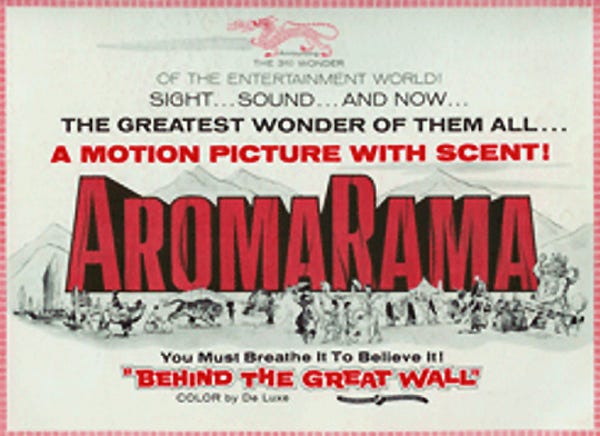
The “Battle of the Smellies”: Documentary Behind the Great Wall introduced “AromaRama,” leading Variety to dub the feud with the rival “Smell-O-Vision” (debuting in early 1960 with Scent of Mystery) as “The Battle of the Smellies”. AromaRama piped the scents through the theater’s air conditioning units, whereas Smell-O-Vision employed a complex and expensive series of tubes that snaked under the seats. Audiences complained that either the scents mixed together or they were underwhelmed by what they smelled. The box office numbers stank.
Social Impacts
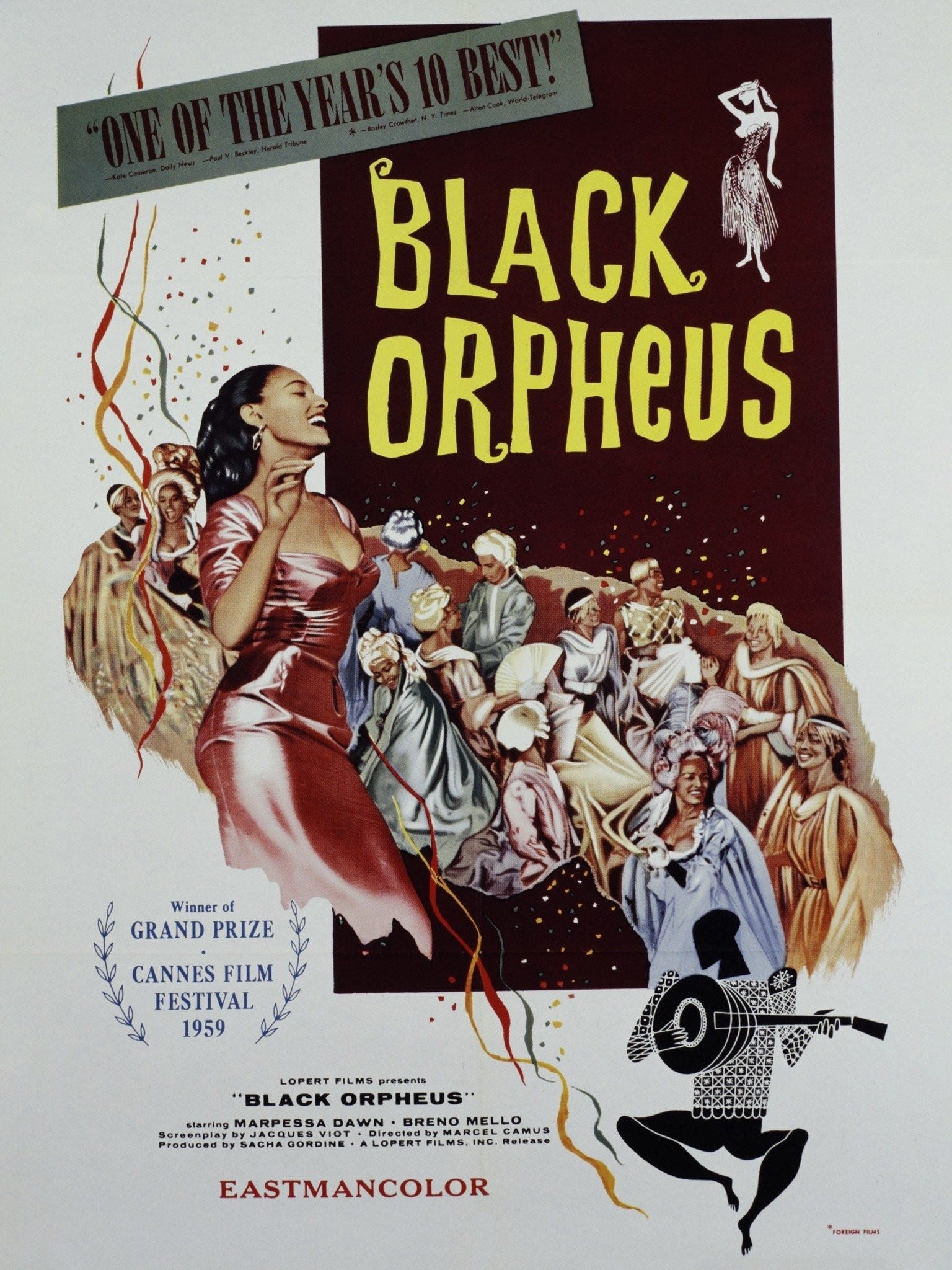
Many films in 1959 sought to influence social developments of the times. Nuclear disarmament was on many people’s minds. Before Kubrick directed Peter Sellers playing three characters about nuclear war in Dr. Strangelove (1964), Sellers balanced three roles in Jack Arnold’s The Mouse That Roared, about a small country intentionally at war with the United States, which also explores themes of atomic weapons. Both Stanley Kramer’s On the Beach and The World, the Flesh, and the Devil depicted the aftermath of nuclear war, while the latter also explored how race would play out as a factor in that harrowing situation. Other terrific films that explored race in ‘59 are Cassavetes’ Shadows, Douglas Sirk’s Imitation of Life, Samuel Fuller’s The Crimson Kimono, Robert Wise’s Odds Against Tomorrow, and Marcel Camus’ Black Orpheus.
The Dept. of Curiosities
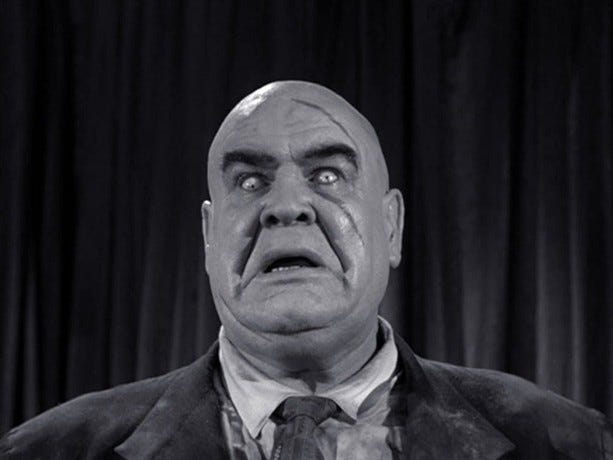
The Worst Movie Ever: After a bumpy limited release schedule, Ed Wood finally widely released his sci-fi epic, Plan 9 from Outer Space. The movie was a flop and later became a cult classic for being dubbed “The Worst Film Ever Made” by Michael and Harry Medved in 1980.
The End of an Era: The Three Stooges released their final film, marking the end of the classic slapstick shorts era.
TV Landmark: Rod Serling’s The Twilight Zone premiered, changing the landscape of on-screen science fiction forever. In 1983 Steven Spielberg teamed up with John Landis, Joe Dante, and George Miller to direct and produce an anthology feature film, The Twilight Zone: The Movie, to mixed reviews (I am not a fan). Comedian and critically acclaimed horror film director Jordan Peele would later produce a TV reboot in 2019.
In Memoriam
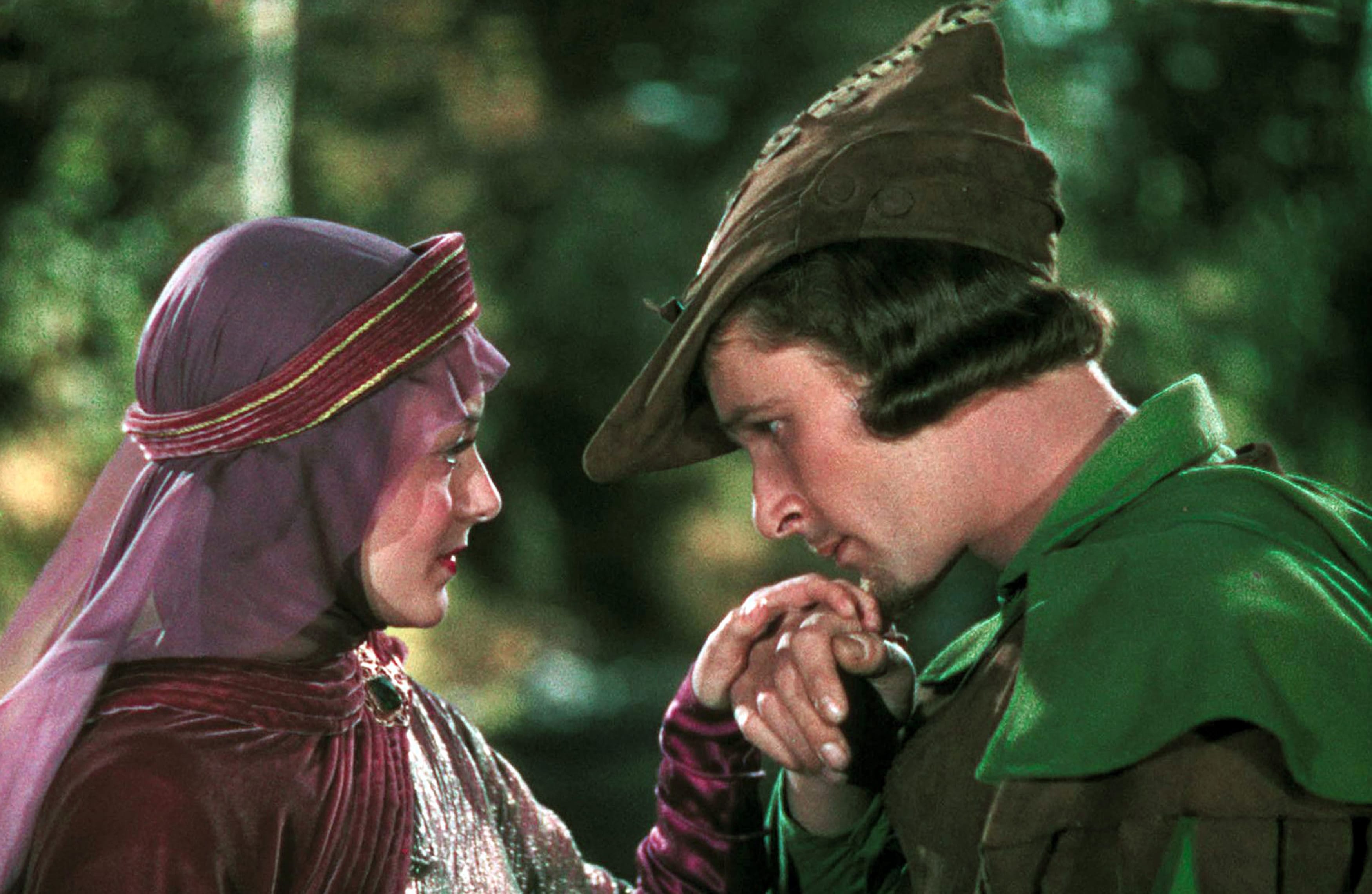
Errol Flynn: Swashbuckling hero and womanizing hedonist, Flynn was as controversial a lead man as they get. He’s known for films such as The Adventures of Robin Hood (1938) and Captain Blood (1935).
Cecil B. DeMille: A giant of the Golden Age of Hollywood, DeMille produced and directed some of the biggest movies in Hollywood for 5 decades. He’s known for films such as The Ten Commandments (1956), The Greatest Show on Earth (1952), and The King of Kings (1927).
Lou Costello: Of Abbott and Costello fame, Lou and Bud worked as a team in television and film for over 20 years. They’re famously known for their “Who’s On First” bit.
Raymond Chandler: Detective novelist and screenwriter whose hard-boiled style defined the film noir genre. His work is stamped on classics including The Big Sleep (based on his novel), Double Indemnity, and Strangers on a Train.
Track my film journey: I rate and review 400+ movies every year. Follow my personal diary for a daily glimpse into what I watch for this project and beyond.